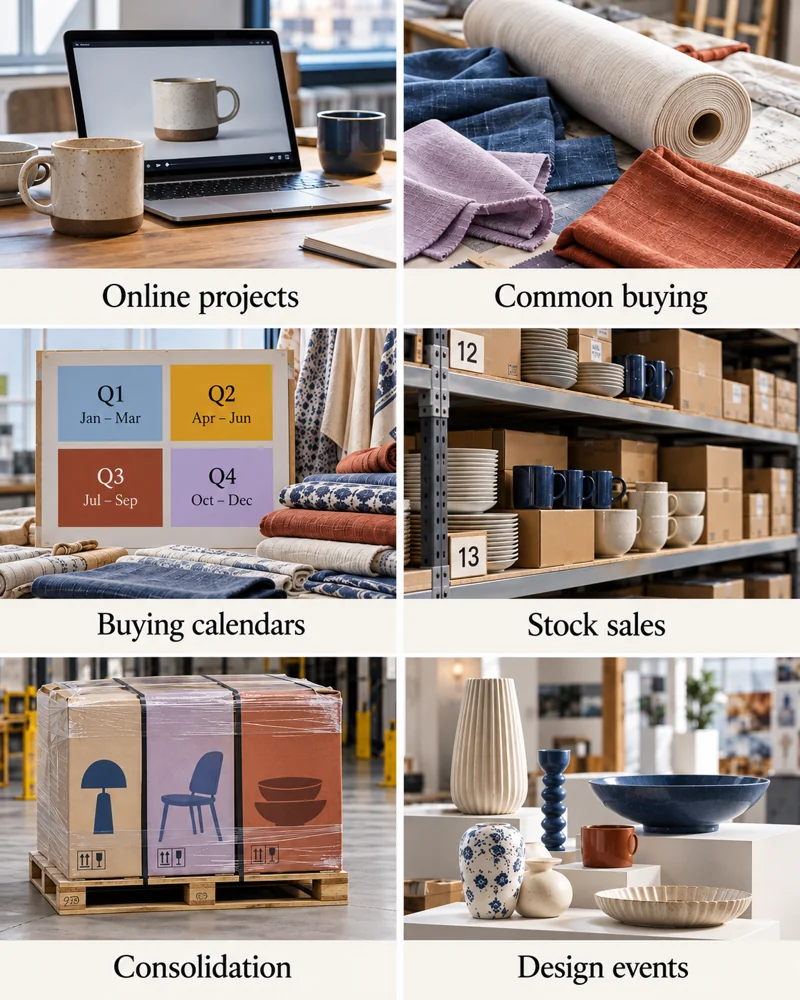
Bring collaborative programmes together, with each buyer decision kept clear.
Gnik coordinates buying calendars, compatible demand, suppliers, product development and movement where a shared programme creates practical commercial value.
A programme begins only when the common element is clear and the commercial boundary is credible. Gnik organises the connections, decision sequence and evidence while each buyer retains control of its own requirement.
Buying calendars
Work backwards from the selling window and organise the decisions required before it.
Who it can help
Retailers, brands, distributors and hospitality buyers planning seasonal, launch or replenishment programmes.
How Gnik coordinates it
Gnik connects range planning, sample cut-offs, testing, approvals, production readiness and shipment timing to one practical calendar.
Explore compatible demand without exposing one buyer's commercial position to another.
Who it can help
Buyers whose requirements may share material, setup, production, pack or minimum-order economics.
How Gnik coordinates it
Gnik assesses compatibility, commercial boundaries and supplier feasibility while keeping identity, price and approval authority controlled.
Commercial value
Where genuine compatibility exists, participants may access better production logic without being forced into unsuitable standardisation.
Need-to-know confidentiality
Comparable specifications
Minimum and setup logic
Independent buyer approvals
Consolidated buying & shipping
Coordinate compatible products or shipments where timing, volume, freight and overall economics support a viable programme.
Who it can help
Buyers working across categories, suppliers or origins where timing, handling and documentation may be aligned.
How Gnik coordinates it
Gnik examines product readiness, ownership, packing, documents, storage, handling, freight and destination requirements before proposing consolidation.
Commercial value
The route can reduce fragmentation and improve shipment visibility, but only after complexity and added handling are considered honestly.
Feasibility before promise
Ownership and title clarity
Pack and document control
Exception visibility
Design events & challenges
Connect ideas, capability and buyer opportunity through a governed development route.
Who it can help
Buyers, designers, universities, mentors, artisans and manufacturers participating in defined programmes.
How Gnik coordinates it
Each event sets its brief, eligibility, originality, rights, review, manufacturability and possible development pathway before participation begins.
Commercial value
Creative participation becomes commercially meaningful without blurring ownership, recognition or future-use permissions.
Originality and rights
Directional design briefs
Manufacturability feedback
Separate development agreements
Two-minute visual explanation
See how one programme can coordinate many moving parts.
A visual case journey will follow a buying window from participant fit and protected requirements through development, production, consolidation and delivery—showing what is shared and what remains independent.
Place a collaborative-programme opportunity in its commercial context.
Short selections do most of the work. Your information is used only to review, route and respond to this enquiry.
Private commercial contextRole-specific routingNo public listing
Questions before the next step
Before you continue
What makes a common-buying opportunity workable?
Requirements need enough compatibility in specification, timing, quantity, material or production logic to create a genuine benefit without exposing confidential information.
Does consolidation always reduce cost?
No. Freight benefit must be considered alongside handling, storage, documents, timing, origin and exception risk before any commitment.
Can participants retain separate products and approvals?
Yes. A shared programme does not remove independent product, commercial or legal authority.
Are design events always competitions?
No. They may include live briefs, critiques, buyer calendars, university programmes, collaborative development or a formal challenge.
Have a live commercial need?
Tell us what you need. We’ll connect you with the right Gnik team.