A developed point of view and evidence of completed work
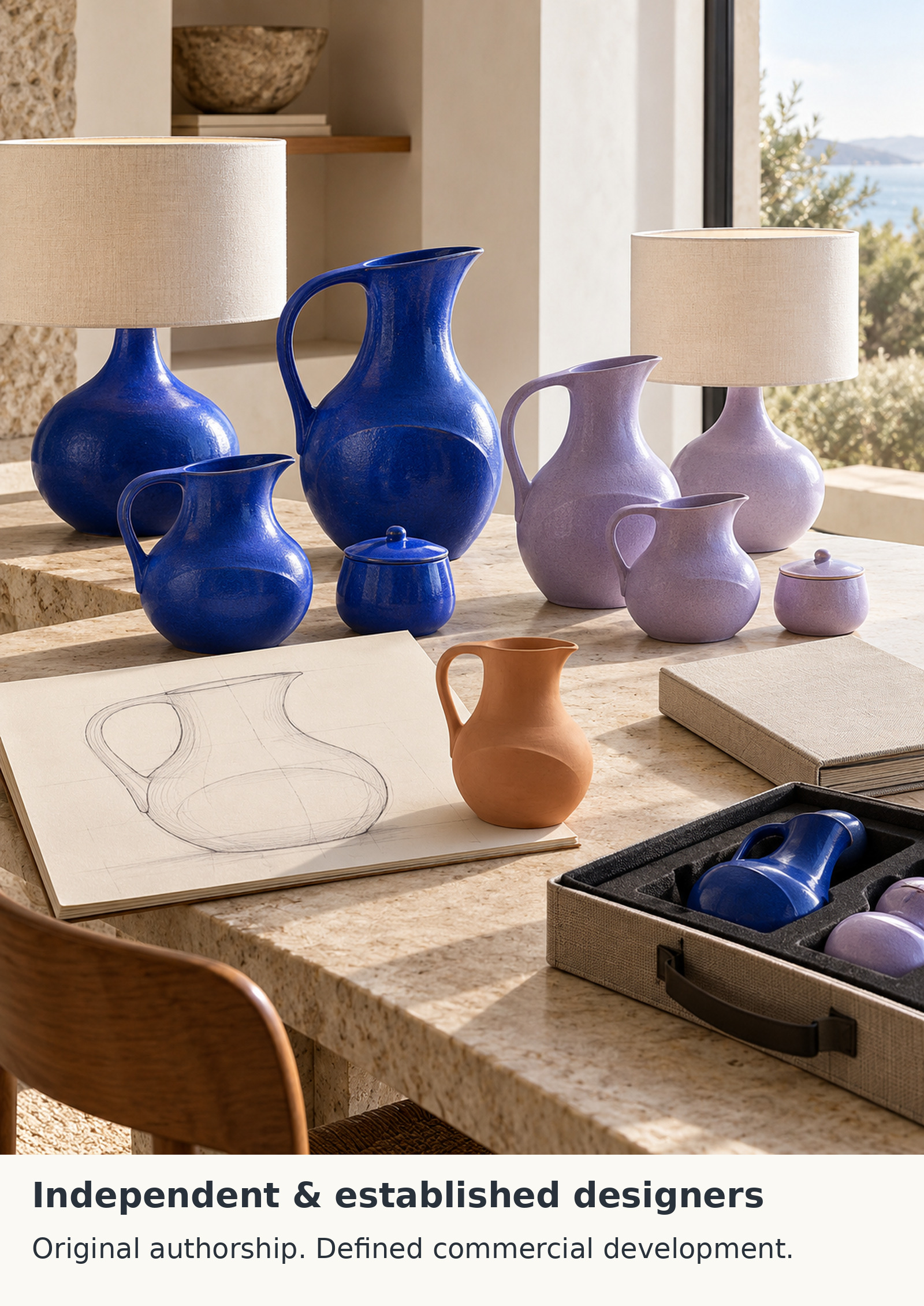
Independent & established designers
Bring your design practice into real product development.
For practising designers and studios contributing concepts, collections, category expertise, licensing or commissioned development.
What Gnik recognises here
The review starts from where you are professionally.
Commercial experience without forcing every studio into the same model
The difference between commission, licence, sale and collaboration
The value of production-ready handover and constructive iteration
How collaboration can happen
Three clear ways to participate.
Gnik does not use “collaboration” as a vague substitute for scope, rights, payment or responsibility.
Commissioned briefs
Respond to a defined buyer, range, product or market challenge under agreed scope and terms.
Design licensing or purchase
Introduce original work for a separate rights, territory, duration and reward discussion.
Collection collaboration
Work with product and manufacturing specialists to translate a design direction into a coherent range.
The working route
A clear process protects authorship, feedback and any commercial use.
Selection, feedback and commercial use remain separate decisions.
Practice fit
Discipline, markets, product experience and working model are reviewed.
Commercial brief
Audience, category, deliverables, timetable and rights context are made explicit.
Product translation
Materials, construction, cost, production and buyer relevance inform development.
Agreement before use
Fee, licence, ownership, credit, confidentiality and cancellation are recorded.
A better first conversation
Introduce the practice behind the portfolio.
Short selections do most of the work. Your information is used only to review, route and respond to this enquiry.
Private commercial contextRole-specific routingNo public listing