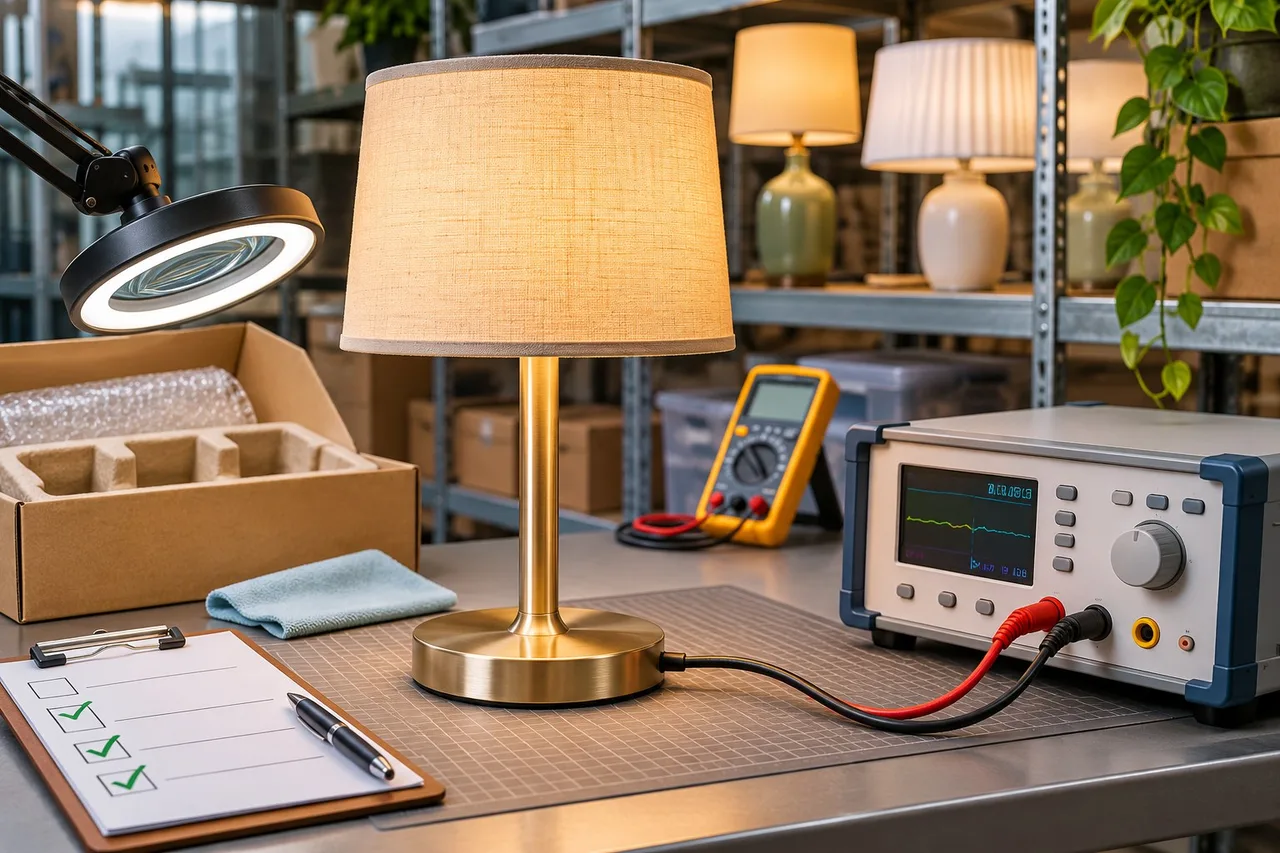
The lifecycle-value decision
For product, service, sustainability and commercial teams, refurbishment quality plans is not only a technical question. It can affect repair cost, returns, spare-part exposure, recovery value, customer experience and circularity claims. The useful decision is whether the proposed product, supplier and evidence route is strong enough for the intended market and channel—not whether another document can be added to the file.
Gnik’s role in execution
Gnik can carry lifecycle, repair, packaging and reverse-flow requirements into supplier development and evidence collection. The buyer retains responsibility for service policy, environmental claims, waste obligations and market-specific compliance decisions.
Refurbished can describe anything from an unopened customer return to a heavily used unit rebuilt with recovered parts. Without a controlled grade and test route, two products sold under the same label can have very different safety, appearance and remaining life. The resulting complaints damage the primary brand as well as the recovery channel.
EU product-safety rules include used, repaired and reconditioned products within their applicable framework, while CPSC guidance stresses that recalled products must not re-enter sale in the United States. IEC 62309 provides assurance concepts for products containing reused parts. The final plan must map the exact category, repair and market with qualified specialists.
Define what refurbished means for this programme
State eligible source, age, use, repair depth, cosmetic grade, included accessories, software status, warranty and sales channel. Distinguish open-box, used, repaired, refurbished and remanufactured if the business uses those labels. Avoid grade A or certified without a published internal definition and evidence. The customer-facing description should match the controlled work route.
| Intake class | Possible route | Required decision |
|---|---|---|
| Unopened return | Inspection and resale | Seal, identity, storage and recall check |
| Opened functional | Clean, test and grade | Completeness, data and cosmetic limits |
| Faulty repairable | Diagnose, repair and requalify | Approved fault and parts route |
| Unsafe/unknown | Quarantine and authorised disposition | No automatic refurbishment |
Quarantine before powering or cleaning
Record model, serial, return reason, customer incident, physical condition, liquid, battery, pest, chemical and tamper indicators. Check recall and corrective-action status. Isolate high-risk items and data-bearing devices. Train staff not to energise damaged equipment or conceal evidence through cleaning before technical triage.
Protect customer and device data
Define secure unlinking, authentication, sanitisation and verification for connected products and storage media. Record the method and result without retaining customer content. Control credentials used during test. If data cannot be removed reliably, route the unit to authorised destruction or another lawful outcome rather than resale.
- Use controlled refurbishment job and unit identities.
- Preserve the original return reason and intake photographs.
- Separate awaiting decision, work in progress, passed, failed and scrap states.
- Prevent parts or accessories from moving between jobs without records.
- Block recalled and suspect populations in both system and physical stock.
- Record every label, serial or firmware change.
Diagnose and authorise the repair route
Use defined fault codes, diagnostic methods and escalation. Approve which assemblies may be repaired, replaced or harvested and by whom. Avoid repeated part substitution until a unit passes. For intermittent failures, use stress, duration or environmental tests proportionate to the failure. Preserve original and confirmed fault data for design feedback.
Control new and recovered parts
Specify approved part number, source, revision and quality status. If recovered parts are permitted, use a separate qualification route covering donor, condition, test, compatibility and remaining dependability. Do not use counterfeit, recalled, rejected or untraceable parts. Record the component-to-unit relationship for safety and repeat-failure investigation.
| Release layer | Evidence | Boundary |
|---|---|---|
| Safety | Required product and post-repair checks | Cannot be waived by cosmetic grade |
| Function | All promised features and interfaces | Not only the original complaint |
| Cosmetic | Controlled zones and grade examples | Must not hide structural or heat damage |
| Configuration | Software, settings, accessories and labels | Market and model-specific |
Validate cleaning and cosmetic restoration
Define permitted chemicals, disassembly, drying, contamination limits and surface treatments. Ensure cleaning does not damage coatings, seals, flame-retardant materials or electronics. Use controlled cosmetic zones, lighting and examples. Never paint, cover or polish a defect that signals overheating, corrosion, impact or structural failure.
Test the complete product after repair
Run the applicable safety, function, performance and configuration checks on the assembled unit using suitable equipment and competent personnel. Include charging, leakage, load, guards, interlocks or protective earth as relevant. Record raw results and decision. Sampling may support process monitoring, but each refurbished unit may need defined individual release checks according to risk and law.
Create traceable labels and listings
Preserve required manufacturer, importer, safety and model information. Add refurbishment identity, grade or warranty information where useful and lawful without obscuring original marks. Product pages should disclose material condition and accessories accurately. Avoid new, like new or environmentally beneficial claims unless the evidence and consumer impression support them.
Set warranty and after-sales routes from evidence
Define warranty period, exclusions, parts support and escalation consistent with market law and demonstrated reliability. Track repeat failure and no-fault-found rates by refurbisher, part and unit age. A shorter commercial warranty should not be used to remove statutory rights, and a full warranty should not be promised when remaining-life evidence is weak.
Audit the refurbisher as a production process
Review competence, work instructions, equipment, calibration, parts, data security, nonconforming product, recall screens and downstream waste partners. Reconcile units received, released, cannibalised, recycled and missing. Test report and label authenticity. Refurbishment should have controlled process capability, not operate as a technician's undocumented craft.
Validate the grading system between people and sites
Give graders controlled visual examples, measurement conditions and decision rules, then run calibration using the same units. Measure agreement and investigate categories with frequent disagreement. Prevent sites from redefining grades to clear backlog or meet yield. If a product is downgraded after release, preserve the original and corrected decision. Customer expectations depend on consistent grading across every listing, warehouse and refurbisher.
Use reliability and complaint data to adjust the route
Track failure time, symptom, repaired component, technician, donor part status and customer outcome. Compare refurbished and relevant new-product populations without assuming equal age or use. Tighten tests, exclude donor classes or redesign the repair when evidence shows repeat failure. A good initial pass rate can coexist with poor three-month reliability, so release metrics must be joined to post-sale performance and warranty cost.
Control cross-border movement of returned and refurbished units. Document whether items are products, used equipment or waste under origin, transit and destination rules; confirm batteries, dangerous goods, customs value and repair procedure. The Basel Convention notes that national treatment can differ. Do not consolidate untested failures for export under a generic repair description. Keep evidence showing condition, intended operation and lawful destination before movement, and separate units that cannot meet the approved route.
The refurbishment conclusion
Refurbished product quality is established by a repeatable intake-to-release system and an honest condition promise. When safety, parts, testing, traceability and warranty evidence remain connected, recovery can create a credible secondary product rather than transfer return uncertainty to the next customer.
How Gnik can move this decision forward
Gnik can help buyers translate return conditions into controlled supplier or partner work, test and traceability evidence while qualified product, safety, data and legal owners approve refurbished release.
Practical next step: send Gnik the product architecture, expected service model and destination markets. Gnik can help turn it into a supplier-facing lifecycle and reverse-flow requirement brief before quotation, sampling, order placement or shipment release, as applicable.