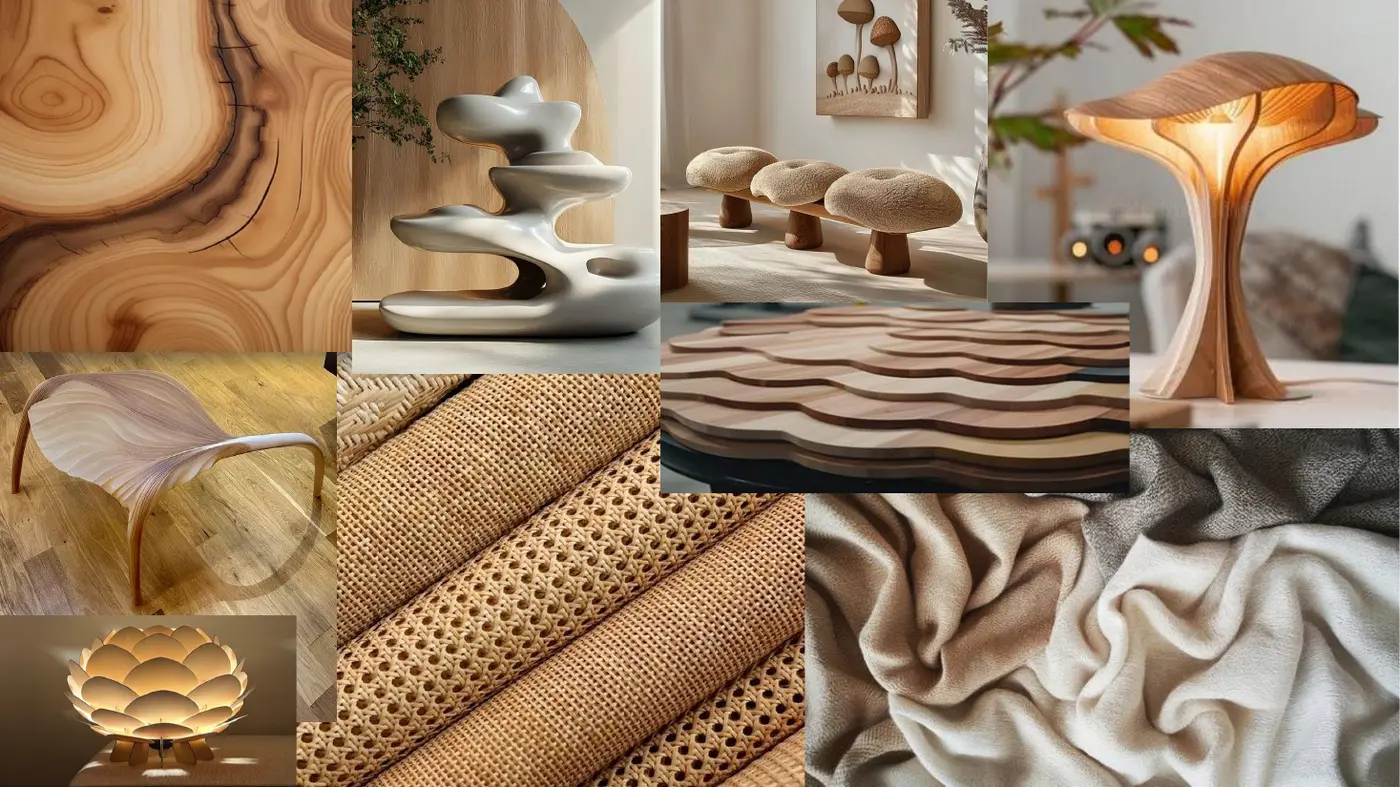
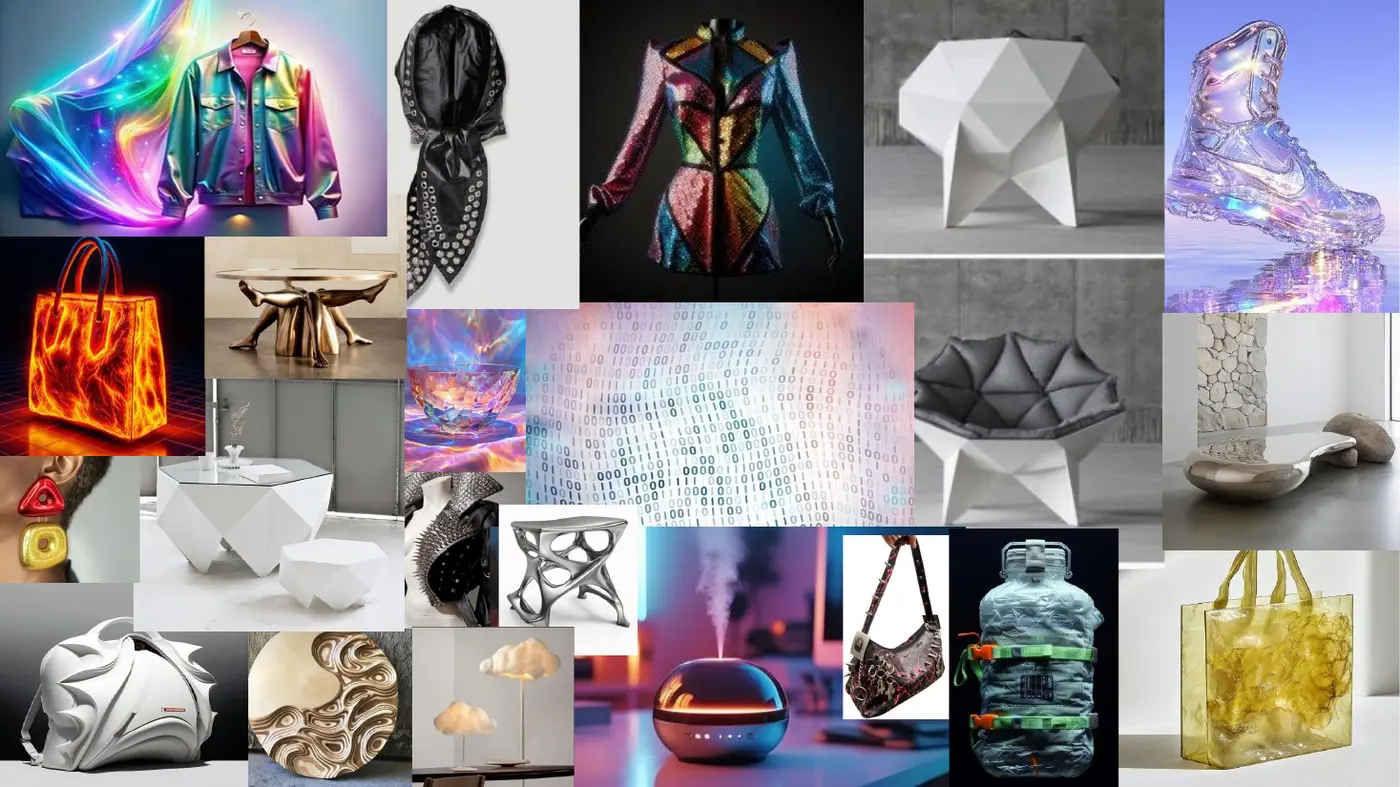
What it may be made from
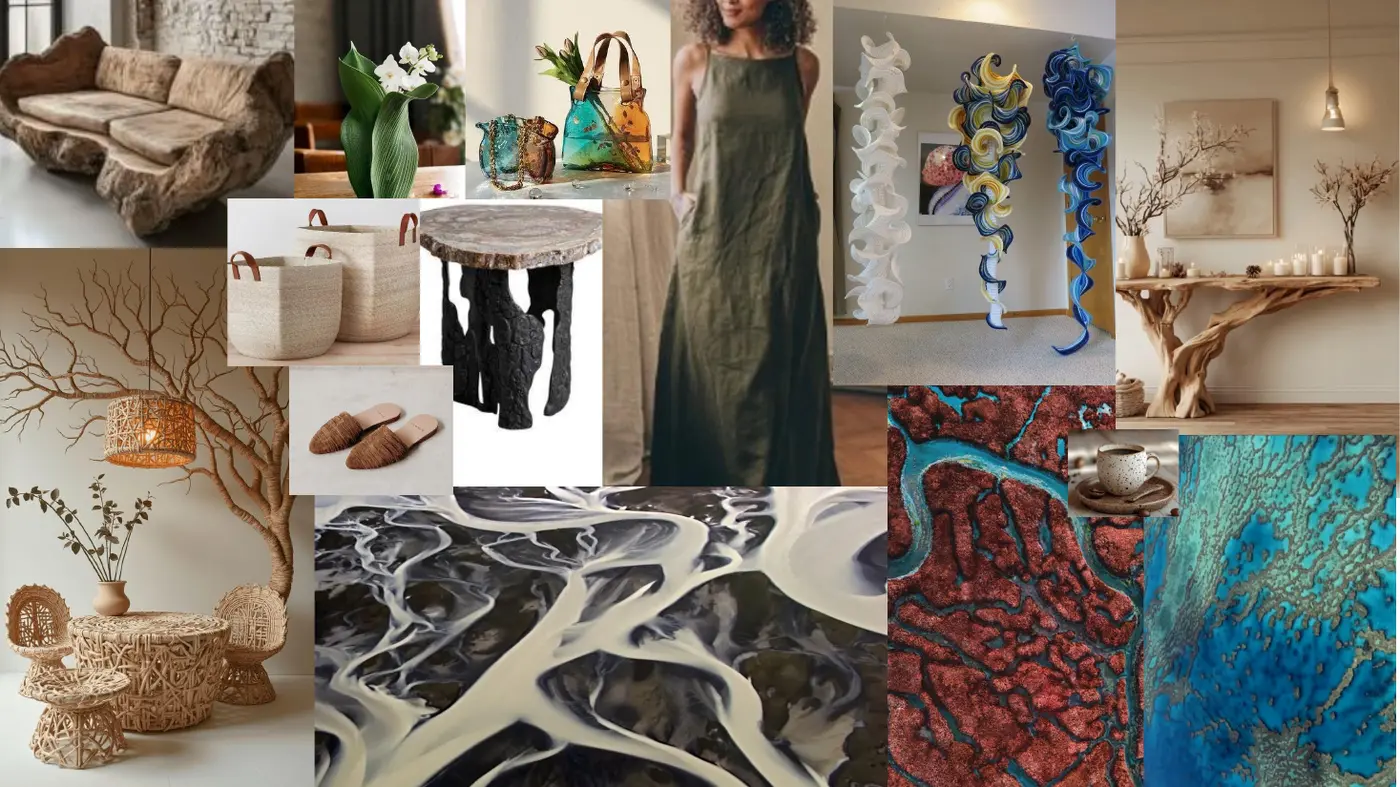
- Reclaimed timber, raw fibres and hand-finished clay
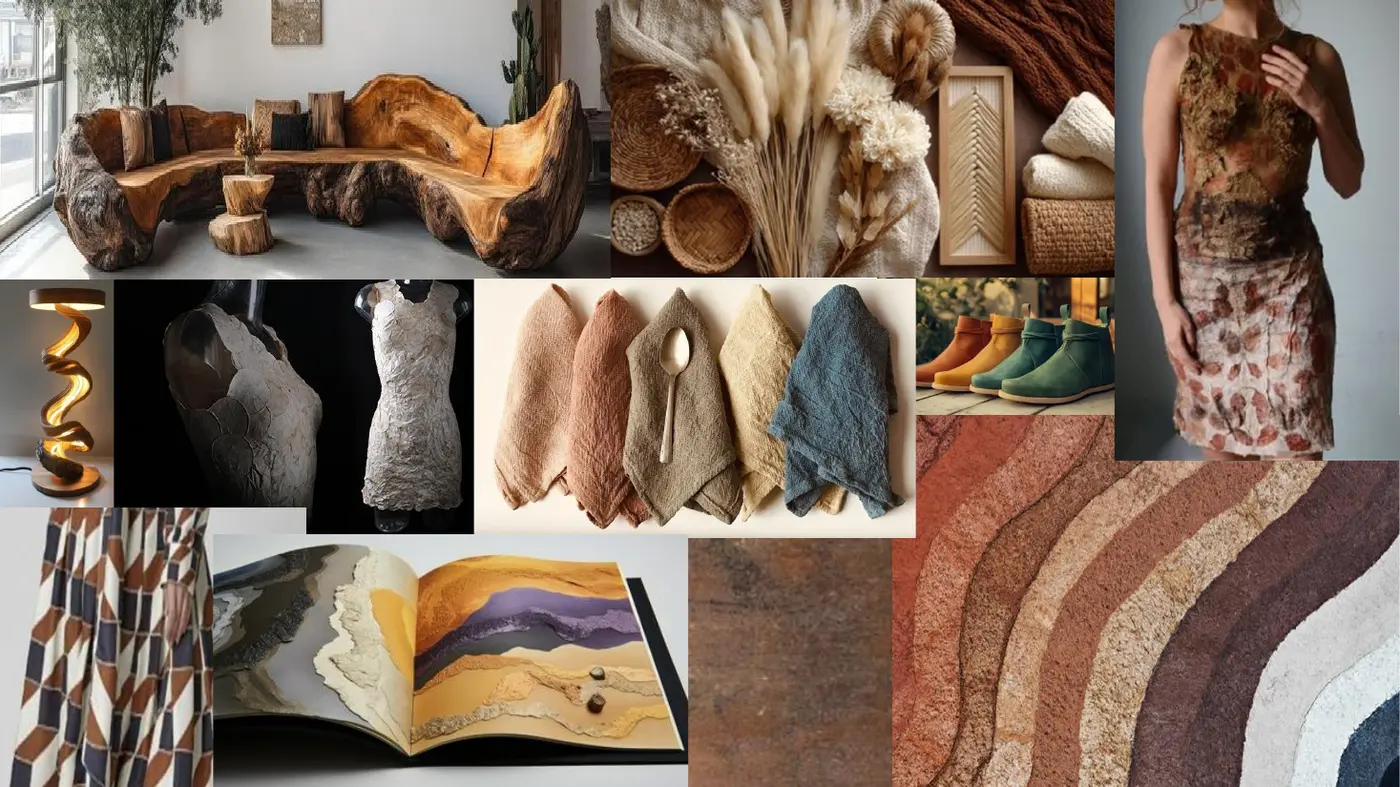
- Weathered stone, mineral pigments and layered plaster
- Coarse weaves, soft wraps and irregular surfaces
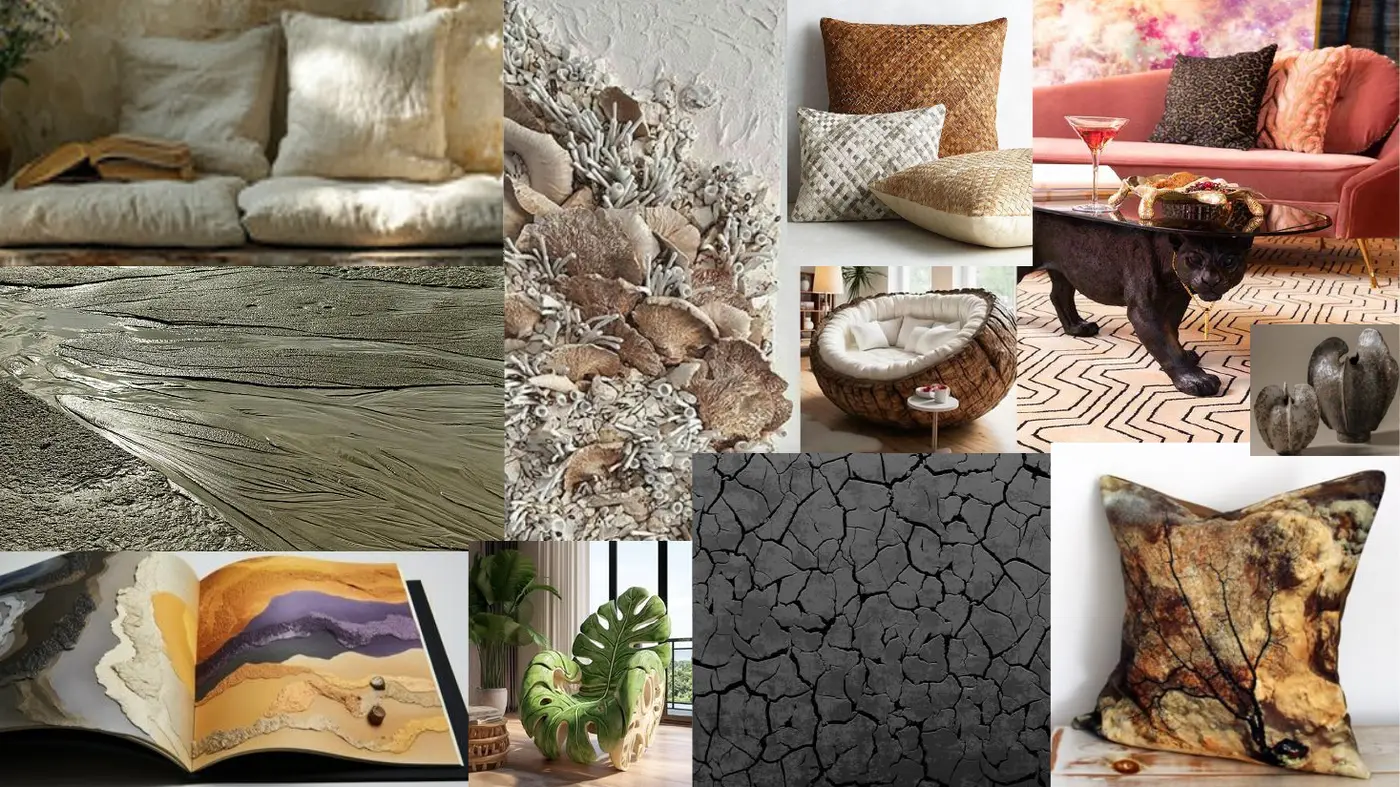
- Oxidised, patinated and water-marked effects
Trend direction · working horizon 2028
A material-led direction shaped by erosion, sediment, reclaimed surfaces and fluid natural forms—earthy without becoming rustic by default.
Direction thesis
Commercial question: Which imperfections are valuable design evidence, and which must remain controlled for function, safety and repeatability?
Design language
These cues are prompts, not a checklist. A coherent product may use only one or two—provided the reason is clear.
Digital colour direction
These screen swatches interpret the supplied study for the web. Final product colour must be agreed through the buyer’s required physical standard, substrate, finish, lab dip or approved master.
Commercial translation
Relevance depends on buyer model, end customer, target cost, timing and category. The direction should support a product decision—not dominate it.
Mineral gradients, irregular weave and layered tactile neutrals.
Reclaimed surfaces, grounded mass and naturally imperfect outlines.
Eroded ceramics, sculptural vessels and pigment-rich accessories.
Loose drape, soft wraps and earth-dyed material expression.
Biophilic calm, sensory surfaces and land-water material stories.
Direction guardrail
Natural variation must be specified. ‘Organic’ should never become an excuse for inconsistent function, undocumented material or avoidable quality risk.
Put the direction to work
Customer, category, price, channel, timing and success measure.
Start a range brief →DesignerOriginal concept, user, material, function and construction logic.
Join the design programme →University / design schoolResearch, creative reasoning, critique and explicit rights boundaries.
Propose collaboration →Supplier / artisanMaterials, construction, cost, capacity, limits and development needs.
Introduce capability →Supplied source study
The attached six-page study is preserved here as the source for this web interpretation. Before the website becomes openly public, Gnik should confirm rights for every reference image, named colour standard and external contribution within the PDF.
Compare the other directions