What it may be made from
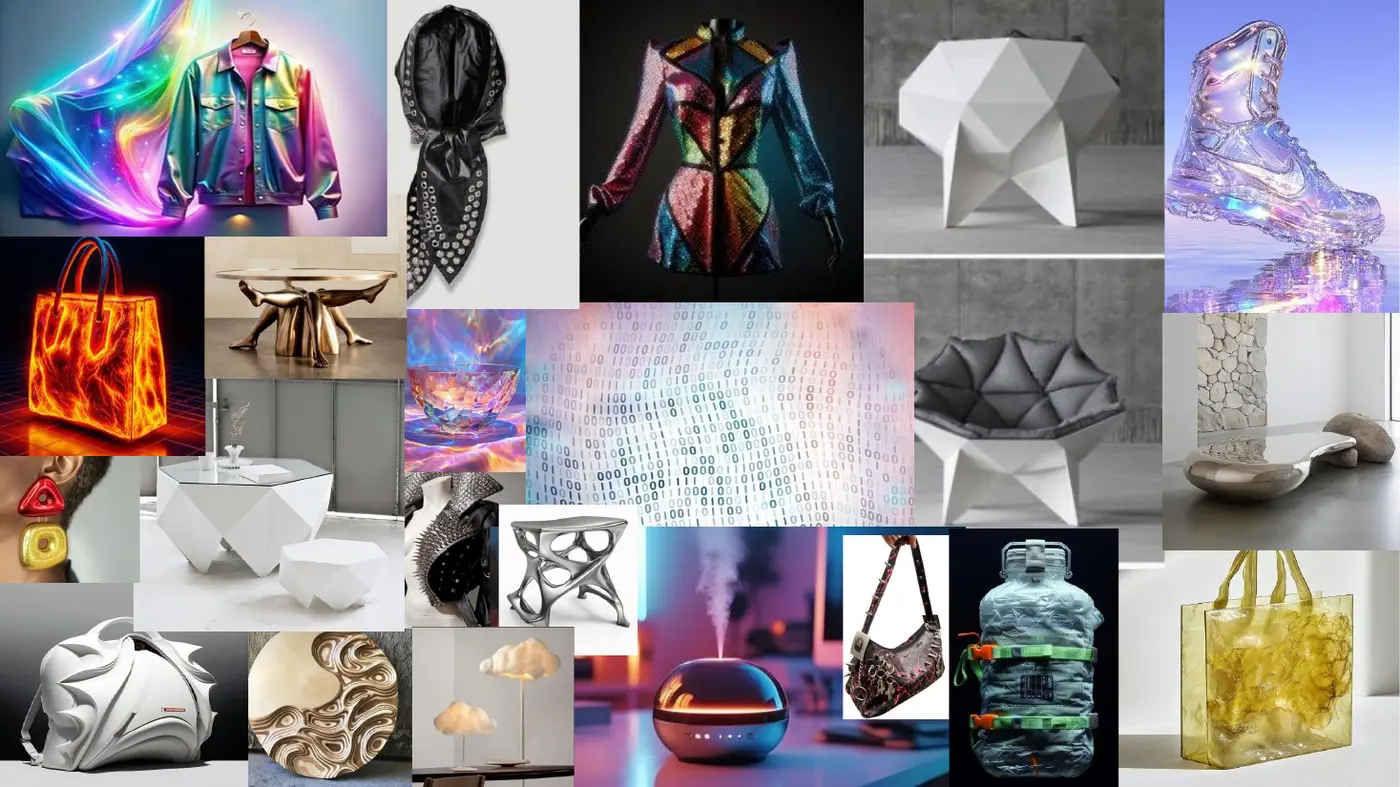
- Iridescent, mirrored and translucent finishes
- Mesh, neoprene, acrylic, nylon and organza
- Recycled, moulded and 3D-informed material routes
- Chrome effects, high gloss and tactile foam
Trend direction · working horizon 2028
A high-expression direction combining modular geometry, reflective surfaces, colour-shift cues and digitally influenced form across fashion, objects and interiors.
Direction thesis
Commercial question: Which material or functional innovation is feasible, safe, repairable and valuable to the intended user?


Design language
These cues are prompts, not a checklist. A coherent product may use only one or two—provided the reason is clear.
Digital colour direction
These screen swatches interpret the supplied study for the web. Final product colour must be agreed through the buyer’s required physical standard, substrate, finish, lab dip or approved master.
Commercial translation
Relevance depends on buyer model, end customer, target cost, timing and category. The direction should support a product decision—not dominate it.
Modular layers, optical rhythm and performance-informed expression.
Translucent, sculptural and adaptable pieces with vivid contrast.
Moulded geometry, symmetry breaks and colour-led statement forms.
Reflective surfaces, controlled iridescence and light-responsive cues.
Modular reveal, digital colour and reusable structures with presence.
Direction guardrail
Do not imply embedded technology where none exists. Validate safety, durability, recyclability and production feasibility before promising interactive performance.
Put the direction to work
Customer, category, price, channel, timing and success measure.
Start a range brief →DesignerOriginal concept, user, material, function and construction logic.
Join the design programme →University / design schoolResearch, creative reasoning, critique and explicit rights boundaries.
Propose collaboration →Supplier / artisanMaterials, construction, cost, capacity, limits and development needs.
Introduce capability →Supplied source study
The attached six-page study is preserved here as the source for this web interpretation. Before the website becomes openly public, Gnik should confirm rights for every reference image, named colour standard and external contribution within the PDF.
Compare the other directions